Common Injuries in Adults Over 40 and How to Avoid Them

Last updated: July 13, 2026
Forty is not a cliff. But it is a turning point.
The body you have at 42 is not the same one you had at 25, and that is not a bad thing. It just means the rules change. Recovery takes longer. Tissues that were forgiving become a little less so. Strength imbalances that were easy to ignore start showing up as pain.
Understanding what changes after 40, and which injuries become more common, gives you a real advantage. Most of what goes wrong in this decade is predictable. A lot of it is preventable.
Why Adults Over 40 Are More Prone to Injury
Several things shift as we age, and they tend to compound each other.
- Muscle mass naturally decreases, a process called sarcopenia, which begins in the late 30s and accelerates without consistent resistance training
- Tendons and ligaments become less elastic and take longer to recover from load
- Joint cartilage thins gradually over time, reducing the cushioning around high-load joints like the knees and hips
- Recovery time after exercise or exertion increases noticeably
- Hormonal changes, particularly the decline in estrogen and testosterone, affect bone density and connective tissue health
None of this means slowing down. It means training and moving smarter, and paying attention to signals the body sends before they become full injuries.
Low Back Pain
Low back pain is one of the most common complaints in adults over 40, and it rarely arrives out of nowhere. It usually builds. Prolonged sitting, weak core muscles, poor movement mechanics, and accumulated postural stress all set the stage.
The most common culprits include disc degeneration, facet joint irritation, and muscle strains from movements the body was not prepared for. A weekend of heavy lifting after a week of desk work is a classic setup.
Prevention comes down to a few consistent habits: strengthening the deep stabilizing muscles of the core and hips, maintaining mobility in the thoracic spine, and breaking up long periods of sitting. Good posture is not just an aesthetic preference. A physiotherapist can show you how to improve your posture in ways that directly reduce load on the lumbar spine and lower your injury risk over time.
Knee Injuries and Pain
The knee absorbs enormous force during everyday movement. Running, stairs, squatting, even prolonged walking all pass load through the joint. After 40, the structures that support the knee, including the menisci, ligaments, and surrounding musculature, require more deliberate maintenance to stay functional.
Common issues include:
- Patellofemoral pain syndrome, often felt as aching behind or around the kneecap
- Meniscal irritation or tears, which can occur with relatively minor twisting movements
- Osteoarthritic changes that cause stiffness, especially first thing in the morning
- IT band syndrome in active adults who run or cycle
Strong quadriceps and glutes take significant load off the knee joint. If those muscles are weak or imbalanced, the joint compensates, and over time that compensation becomes pain. Orthopaedic bracing can provide support and reduce pain during activity while the underlying strength work is being built, making it a useful tool in the early stages of knee rehabilitation.
Hip Pain and Muscle Strains
Hip pain after 40 is common and often misunderstood. Many people assume it is structural, when in fact it frequently comes from tight hip flexors, weak glutes, or reduced mobility in the hip joint itself, all of which are addressable.
Hip flexor strains are particularly common in adults who sit for long periods and then engage in high-intensity activity. The muscle shortens in a seated position and then gets pulled into a range it is not prepared for. Hip bursitis, labral irritation, and referred pain from the lumbar spine are also common in this age group.
Regular mobility work, adequate warm-up before activity, and building strength through the full range of the hip joint are the most effective preventive strategies. If you are already experiencing hip or back pain and want to understand what is contributing to it, the consequences of delaying physiotherapy are worth understanding before the issue has time to compound.
Shoulder Injuries
The shoulder is the most mobile joint in the body, which also makes it one of the most vulnerable. Rotator cuff strain is the most common shoulder injury in adults over 40, often from overhead activity, repetitive reaching, or accumulated postural stress from desk work.
Frozen shoulder, formally called adhesive capsulitis, also increases in prevalence after 40 and tends to develop slowly, often dismissed as general stiffness until range of motion becomes significantly limited.
If you are noticing persistent shoulder pain that does not resolve with a few days of rest, it is worth getting assessed. Shoulder issues that are addressed early respond far better to conservative treatment than those that have been left for months.

Tendon Problems: The Injury Category Most People Do Not Expect
Tendinopathy, the umbrella term for tendon pain and degeneration, becomes significantly more common after 40. The Achilles tendon, patellar tendon, and rotator cuff tendons are the most frequently affected.
Tendons after 40 have reduced collagen turnover, meaning they repair more slowly after load. The classic pattern is someone who increases their activity level, often walking or running more, and develops persistent tendon pain that does not improve with rest alone.
The research on tendon rehabilitation is clear: progressive loading, not rest, is what drives tendon recovery. A physiotherapist designs a loading program calibrated to the tendon's current capacity and increases it systematically. This is exactly the kind of targeted, evidence-based approach that the team at physiotherapy in Vaughan delivers through one-on-one assessment and personalized programming.
Warning Signs You Should Not Ignore
Some pain is normal soreness from activity. Some pain is the body flagging a problem that needs attention. Here is how to tell the difference.
See a physiotherapist or healthcare provider if you notice:
- Pain that persists beyond a week without improvement
- Swelling, warmth, or significant bruising around a joint
- Weakness or instability, especially in the knee, shoulder, or ankle
- Pain that wakes you at night
- Altered movement, such as a limp or reduced arm swing, that has become habitual
- Sharp pain during specific movements that was not there before
- Recurring pain in the same location despite periods of rest
These are not signs to push through. They are signals worth investigating before they become harder to manage.
Injury Prevention After 40: What Actually Works
Prevention does not mean doing less. It means doing the right things consistently.
- Resistance training. Maintaining and building muscle mass is one of the most protective things an adult over 40 can do. Two to three sessions per week targeting the major muscle groups reduces injury risk, supports joint health, and maintains bone density.
- Mobility and flexibility work. Regular stretching and mobility exercises, particularly for the hips, thoracic spine, and shoulders, counteract the tightening that accumulates with age and desk work.
- Progressive overload, not sudden spikes. Most injuries happen when activity increases too quickly. Adding volume or intensity gradually gives the body time to adapt.
- Adequate recovery. Sleep and rest days matter more after 40. Tissues repair during recovery, not during training. Underestimating this is one of the most common mistakes active adults make.
- Professional guidance before problems develop. A chiropractic assessment or physiotherapy consultation does not have to be reactive. A chiropractor in Vaughan can identify movement limitations and muscle imbalances before they become injuries.
The Role of Physiotherapy in Long-Term Injury Prevention
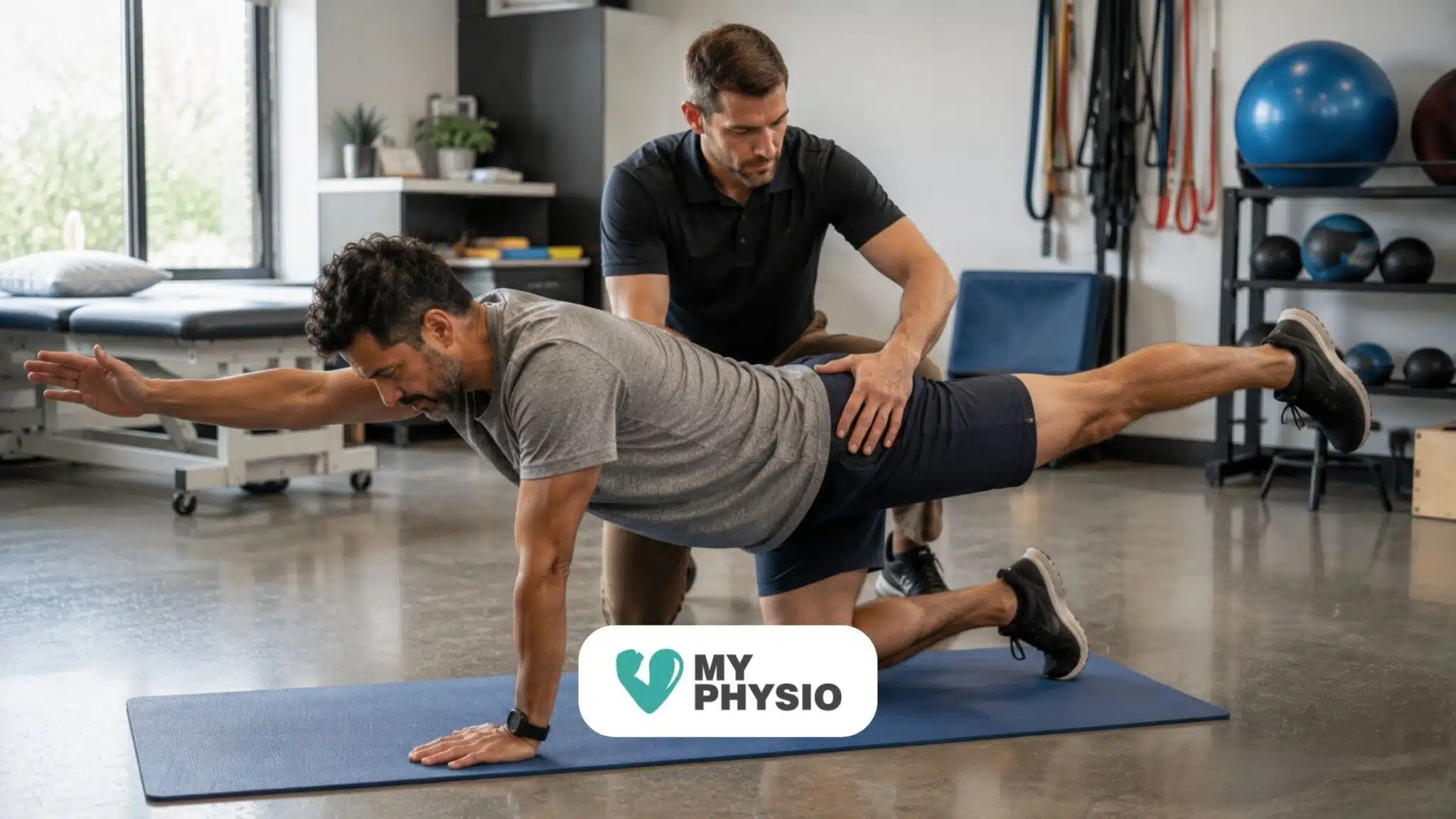
Physiotherapy after 40 is not just about treating what hurts. It is about identifying the underlying reasons why things are going wrong and correcting them before the next injury happens.
That might mean assessing movement patterns, addressing muscle imbalances, building strength in underloaded areas, or improving the mechanics of how you run, lift, or sit. Real prevention is specific. It is based on your body, your activity level, and the particular vulnerabilities that come with how you move and live.
At My Physio, every patient receives one-on-one care from experienced clinicians who focus on root causes rather than temporary symptom relief. The goal is not just getting you out of pain. It is keeping you out of it.
If you are dealing with a current injury, returning to activity after a setback, or simply want to understand what your body needs to stay strong and mobile into your 50s and beyond, we are here to help. Contact us today to book an assessment.