Mobility vs Flexibility: What's the Difference?
Last updated: June 12, 2026
Most people use the words mobility and flexibility interchangeably. In everyday conversation, that is understandable. In practice, confusing the two can lead to training gaps, recurring tightness, and injuries that could have been prevented.
They are related. They are not the same thing. And understanding the difference is one of the most practical steps you can take toward better movement and long-term pain prevention.
What Is Flexibility?
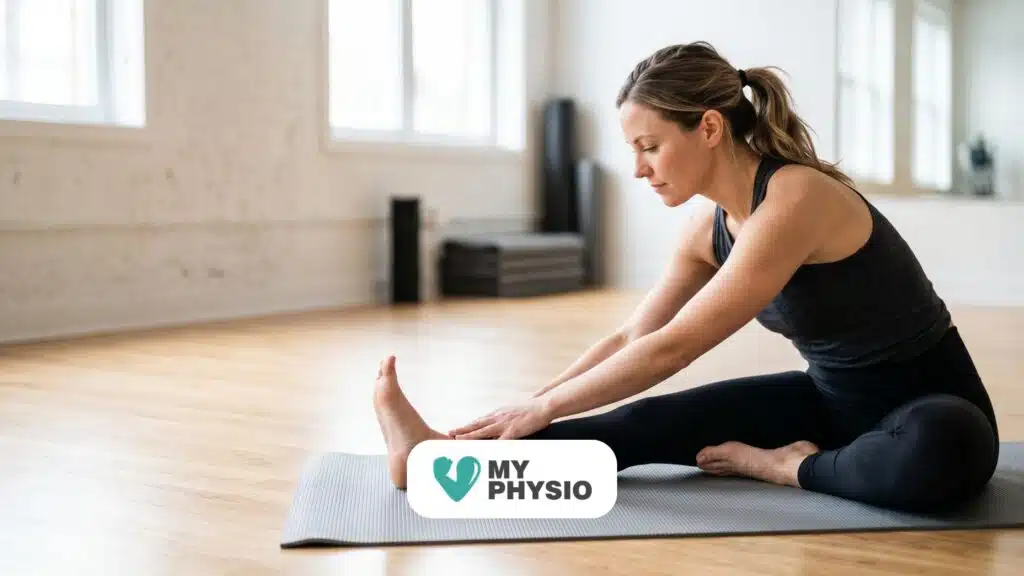
Flexibility refers to the ability of a muscle or muscle group to lengthen passively. In other words, how far a muscle can stretch when an external force is applied, whether that is gravity, a strap, or another person assisting the movement.
When you sit on the floor and reach toward your toes, you are testing flexibility. The hamstrings are being lengthened. The question flexibility answers is: how long can this muscle get?
Flexibility is largely a property of the muscle tissue itself. It can be improved through consistent stretching, and it tends to decline with age, inactivity, and prolonged time in fixed positions.
High flexibility does not automatically mean good movement. A muscle can be capable of great length without the surrounding joint having the strength or control to use that range effectively.
What Is Mobility?
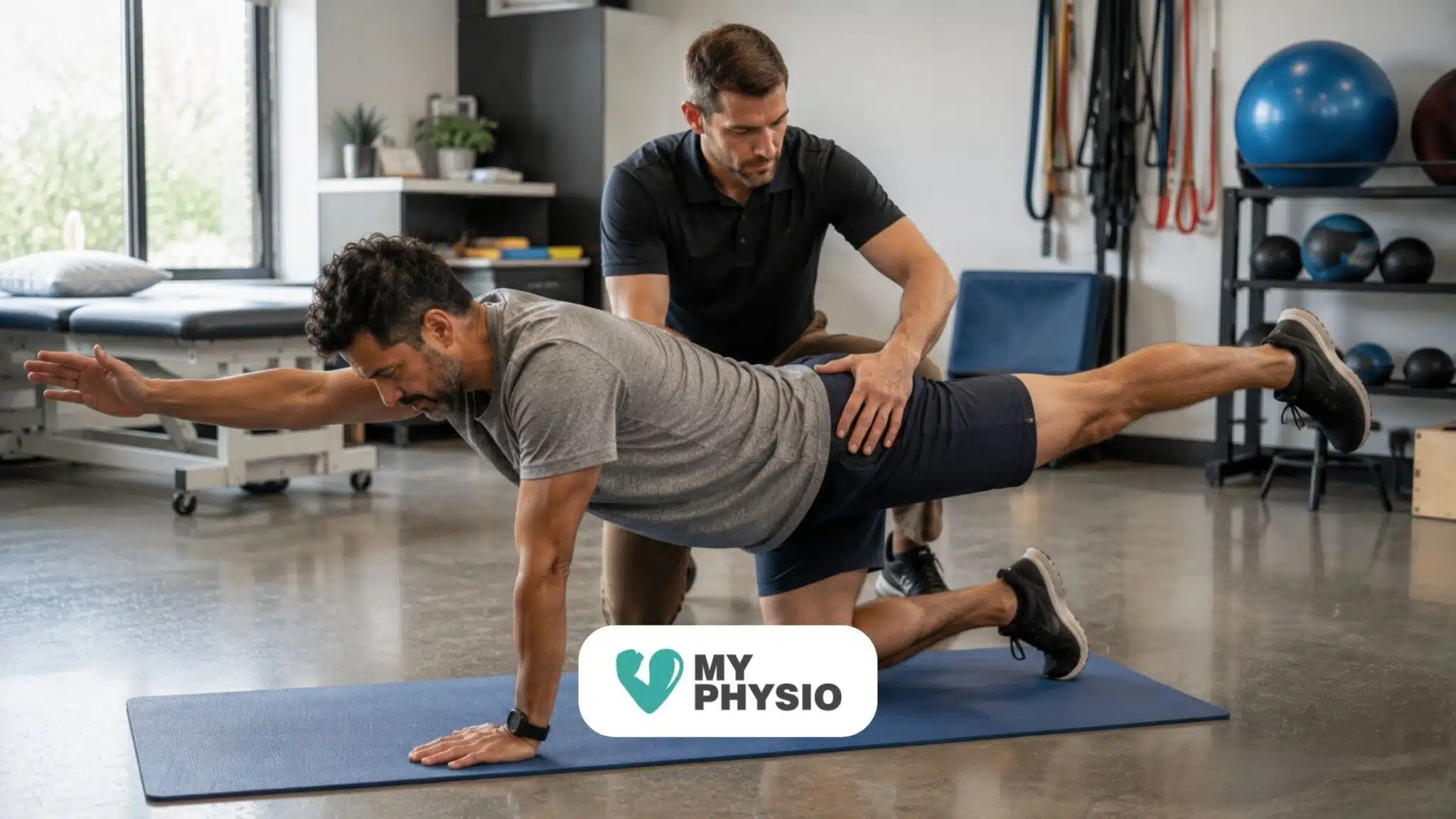
Mobility refers to the ability of a joint to move actively through its full range of motion with control. It is not just about how far you can go. It is about whether your body can get there under its own power and hold that position with stability.
Where flexibility is passive, mobility is active. It requires muscle strength, neuromuscular coordination, and joint integrity working together.
A gymnast may have exceptional flexibility in a passive stretch but limited mobility if they cannot actively control that same range during movement. Conversely, someone with moderate flexibility can have excellent mobility if their joints are strong and well-coordinated throughout their range.
Mobility is what actually governs how you move through daily life, sport, and physical work. It is the quality that determines whether you can squat to pick something up from the floor, reach overhead without compensating through your lower back, or rotate through your hips without straining surrounding structures.
Key Differences Between Mobility and Flexibility
The simplest way to understand the distinction is this:
Flexibility is about the muscle. Mobility is about the joint and the system around it.
Flexibility is passive. Mobility is active.
Flexibility asks: how far can this tissue stretch? Mobility asks: how well can this joint function through its range?
You can have good flexibility with poor mobility. You can also have reasonable mobility with limited flexibility in specific tissues. Most movement problems involve some combination of both, which is why assessment matters more than assumption.
At My Physio, the first step in any treatment plan is understanding exactly which quality is limiting a patient's movement, because the approach to improving each one is different.
Signs You May Have Poor Mobility or Limited Flexibility
Neither limitation always announces itself as pain. Often the first signal is restriction: a movement that feels stuck, a range that has quietly shortened, a compensation pattern that has become habit.
Common signs of limited flexibility include muscle tightness that returns quickly after stretching, difficulty maintaining positions like a deep squat or a full overhead reach, and soreness that lingers longer than expected after activity.
Common signs of poor mobility include joints that feel stiff or locked rather than fluid, reduced range of motion that persists even after warming up, discomfort or instability at end ranges of movement, and a tendency to compensate through other parts of the body when performing basic movements.
If you have been dealing with muscle tightness that does not respond to stretching alone, the issue may be mobility rather than flexibility. Stretching a muscle that is restricted due to joint dysfunction or neuromuscular compensation rarely resolves the underlying problem.
How to Improve Flexibility
Flexibility responds well to consistent, targeted stretching. The most effective approaches include:
Static stretching held for 30 to 60 seconds per position, performed regularly and after activity when tissues are warm. Effective for improving muscle length over time.
Proprioceptive neuromuscular facilitation (PNF) techniques, which combine stretching with muscle contraction to achieve greater lengthening than passive stretching alone. Best performed with a physiotherapist or trained practitioner.
Myofascial release through foam rolling or manual therapy, which addresses restrictions in the connective tissue surrounding muscles and can improve tissue extensibility before stretching.
Consistency matters more than intensity. Brief daily sessions produce better results than infrequent long sessions, and forcing range through pain is counterproductive.
How to Improve Mobility
Mobility training is more complex than flexibility work because it requires building strength and control through range, not just achieving the range passively.
Effective approaches include:
Active range of motion exercises
that take joints through their full available movement under muscular control. Hip circles, thoracic rotations, and controlled ankle circles are common examples.
Strength training through full range
rather than partial range, which builds the muscular capacity to support and stabilize joints at end positions.
Joint mobilization techniques
performed by a physiotherapist, which address restrictions within the joint capsule itself that stretching cannot reach.
Motor control and stability work
that teaches the nervous system to access and control ranges that may be available but underutilized.
The goal of mobility training is not just to achieve a range but to own it. Control at end range is what prevents injury and supports performance.
How Physiotherapy Can Help
Self-directed stretching and mobility work can make a meaningful difference, but there are limits to what general exercises can achieve without an accurate assessment of what is actually restricted and why.
A physiotherapist can identify whether your limitations are primarily muscular, joint-related, or driven by compensation patterns elsewhere in the body. That distinction changes the treatment approach significantly.
Patients at My Physio who are focused on moving freely after a period of reduced activity often find that a combination of hands-on treatment and targeted exercise programming produces results that stretching alone never delivered.
Our physiotherapy services in Brampton and physiotherapy in Vaughan include comprehensive movement assessments that evaluate both flexibility and mobility across major joints, identify the root cause of restrictions, and build a treatment plan around your specific goals.
For patients whose limitations involve soft tissue tension alongside joint restrictions, massage therapy can be an effective complement to physiotherapy, addressing muscular holding patterns that manual joint work alone may not fully resolve.
Where joint dysfunction is a primary driver of mobility limitation, chiropractic treatment may be recommended as part of a coordinated care approach.
The Bottom Line
Flexibility and mobility are both important for movement health and pain prevention. They are not interchangeable, and they do not always respond to the same interventions.
If you have been stretching consistently without seeing lasting improvement, or if certain movements feel restricted despite general fitness, a proper assessment is the most efficient next step.
Movement problems rarely resolve themselves. Addressed early, they rarely become serious. The distinction between mobility and flexibility is where that assessment begins.To book an assessment at My Physio, visit My-Physio.ca.